

March 9, 2026 admin
A distance education college in the UK offers the same accredited qualifications as a traditional college — but delivered entirely online, so you can study from home at your own pace without setting foot on a campus. You get access to quality learning materials, a personal tutor to guide you, and a nationally recognised qualification at the end — all without committing to fixed class times or leaving your home.
Distance education has become a mainstream and well-respected route to gaining qualifications in the UK. Hundreds of thousands of learners choose online colleges each year — working adults fitting study around a job, parents studying during nap times, career changers who cannot afford to stop working. The flexibility to study anytime, anywhere has made distance learning one of the most practical options available.
This article explains what a UK distance education college is, how the study process works, whether qualifications are valid, what courses are available, and what the honest disadvantages are — so you can make a well-informed decision.
What Is a Distance Education College?
A distance education college is an accredited learning institution that delivers courses entirely online or by home study, without requiring learners to attend a physical campus. Learners enrol online, gain instant access to course materials through a virtual learning environment (VLE), and work through modules and assignments at their own pace — studying around their schedule rather than around a timetable.
Each learner is supported by a personal tutor throughout the course. The tutor marks written assignments, gives detailed written feedback, and is available to answer questions by email. This one-to-one guidance means learners are never working completely alone — support is there every step of the way.
Distance education colleges in the UK operate within the same national qualifications framework as traditional colleges. Courses regulated by Ofqual-approved awarding bodies appear on the Regulated Qualifications Framework (RQF) and carry exactly the same legal recognition as qualifications earned in a classroom. Unlike universities offering undergraduate and postgraduate degrees, most UK distance education colleges focus on vocational qualifications — Level 2, Level 3, and Level 4 diplomas — designed specifically to get learners into work or career progression quickly.
Is Distance Education Valid in the UK?
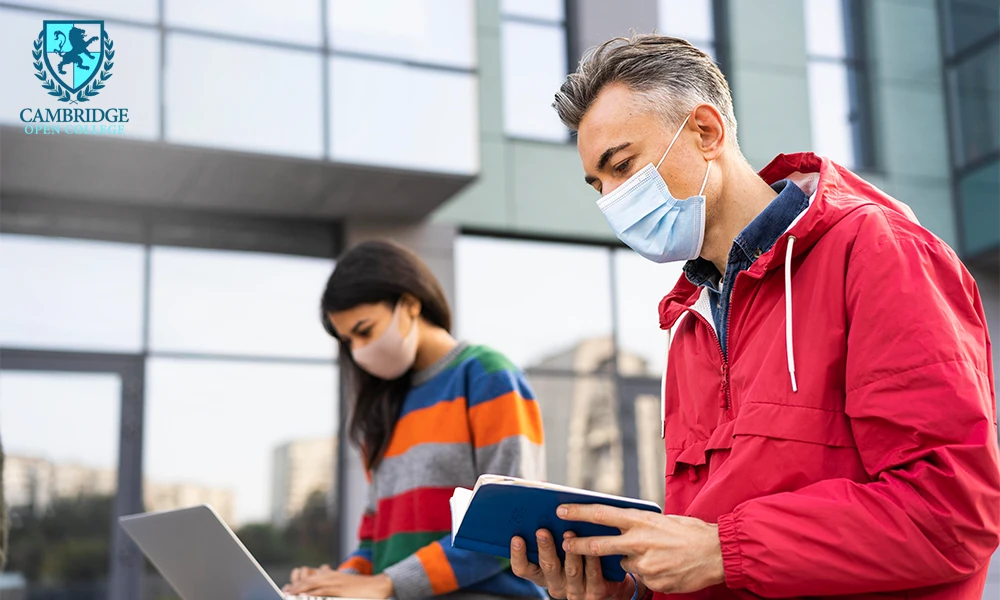
Yes — distance education is completely valid in the UK, and this is one of the most important things to understand before you enrol. As long as you study with an accredited provider and the qualification is regulated by an Ofqual-approved awarding body, the certificate you receive carries the same legal status as one earned at a physical college.
Employers across the UK — in health and social care, education, business, beauty therapy, and many other sectors — regularly accept and value distance learning qualifications. It is the awarding body that gives a qualification its recognition, not the building where the learning took place. Internationally recognised qualifications from UK distance education colleges are also accepted in many countries, making them valuable for overseas learners and those who have recently relocated to the UK.
Our guide to online courses with accredited qualifications explains in detail what to look for when checking whether a course is properly accredited. The online distance learning courses guide is also a helpful resource before you choose a provider.
What Courses Can You Study at a Distance Education College in the UK?
UK distance education colleges offer a wide range of courses and qualifications across many subject areas. The most popular include:
- Health and Social Care — Level 2, Level 3, and Level 4 diplomas covering care work, mental health, wellbeing, and management
- Childcare and Early Years — Level 2 and Level 3 qualifications in childcare, early years education, and the EYFS framework
- Education and Teaching — teaching assistant courses, SEN qualifications, the Level 3 Award in Education and Training, and assessor qualifications
- Business and Management — virtual assistant, business administration, bookkeeping, and leadership courses
- Beauty Therapy — Level 2 and Level 3 beauty therapy, body massage, and nail art qualifications
- Short CPD courses — professional development courses across a broad range of subjects, completed in weeks
Most distance education colleges focus on Level 2 and Level 3 qualifications — equivalent to GCSEs and A-levels respectively — with some offering Level 4 qualifications equivalent to the first year of a university degree. Fees vary by provider and course level, and many colleges offer monthly instalment plans to make study affordable. Some learners may also be eligible for government-funded places — our guide to free online courses with certificates from the UK government explains eligibility clearly. Browse the full range of courses at Cambridge Open College for a practical example of what a distance education college offers across these subject areas.
How Does Studying at a Distance Education College Work?
The process of studying with a UK distance education college is straightforward. Here is what typically happens from enrolment to certification:
- Enrol online — no waiting for term dates or admission interviews. You can start anytime of year.
- Get instant access — log into your virtual learning environment and access all course materials, modules, and assignments immediately after enrolment.
- Study at your own pace — there is no fixed timetable. Work through modules in the morning, evening, or at weekends — whatever fits your life.
- Submit assignments — complete written coursework and submit it to your personal tutor through the online platform.
- Receive tutor feedback — your tutor marks your work, provides written guidance, and supports you throughout by email.
- Get certified — on successful completion, receive your qualification certificate from the awarding body.
Most distance education colleges do not require any face-to-face contact — everything happens remotely, from enrolment to certification. Good student support makes a real difference to how well learners do — look for a provider that offers a dedicated student services team alongside tutor support. Our flexible home study courses guide and flexible study from home article both explain how to structure independent study effectively.
What Are the Disadvantages of Distance Learning?

It is worth being honest about the challenges of distance education before you commit. The main disadvantages are:
- Independent study requires self-discipline. Without fixed class times, some learners find it harder to stay motivated. Building a regular study routine around your schedule makes a significant difference.
- No face-to-face contact. Distance learning does not replicate the campus experience — there are no in-person seminars, group discussions, or student community events.
- Some courses require practical placement. Qualifications in childcare, health and social care, and teaching assistant roles require learners to complete practical hours in a real workplace setting, even when theory is studied online.
- Employer expectations vary. While the vast majority of UK employers accept distance learning qualifications from accredited providers, a small number of roles — particularly in law, medicine, or academic research — may require campus-based university degrees.
For most vocational qualifications in the UK, these disadvantages are outweighed by the practical benefits — especially for adult learners who cannot attend a traditional college. Our adult learning online courses UK guide has helpful advice on managing the challenges of returning to study as an adult.
Frequently Asked Questions
Which college is best for distance education in the UK?
The best distance education college depends on the subject you want to study and the level of qualification you need. Look for a provider accredited by Ofqual-approved awarding bodies, with dedicated tutor support, clear fees, and positive learner reviews. Cambridge Open College is one of the UK’s growing distance education colleges, offering accredited courses across health and social care, childcare, education, beauty, and business — all studied from home.
Is distance education valid in the UK?
Yes — distance education qualifications are completely valid in the UK, provided they are awarded by an Ofqual-approved awarding body and appear on the Regulated Qualifications Framework (RQF). These qualifications carry the same legal status as those earned at a traditional college and are accepted by employers across the UK.
Can you do college online in the UK?
Yes — you can study for a wide range of accredited qualifications entirely online in the UK through a distance education college. Courses are delivered through a virtual learning environment with a personal tutor supporting you throughout. You do not need to attend a campus or commit to fixed study times.
What are the disadvantages of distance learning?
The main disadvantages are the need for self-discipline, the absence of face-to-face contact with tutors and peers, and the fact that some qualifications require practical placement hours in a workplace setting alongside online study. For most adult learners in the UK, the flexibility and affordability of distance education outweigh these challenges.
Cambridge Open College is a trusted UK distance education college that has been helping learners gain accredited qualifications since 2015. It offers a wide range of online distance learning courses across health and social care, childcare, education, business, and beauty — all delivered entirely online with dedicated tutor support, instant access after enrolment, self-paced study, and affordable fees with instalment options. If you are considering studying with a distance education college, our guide to finding the best distance learning college in the UK is a useful next step — or explore the full range of accredited courses at Cambridge Open College to find the right qualification for your goals.