
December 4, 2025 admin
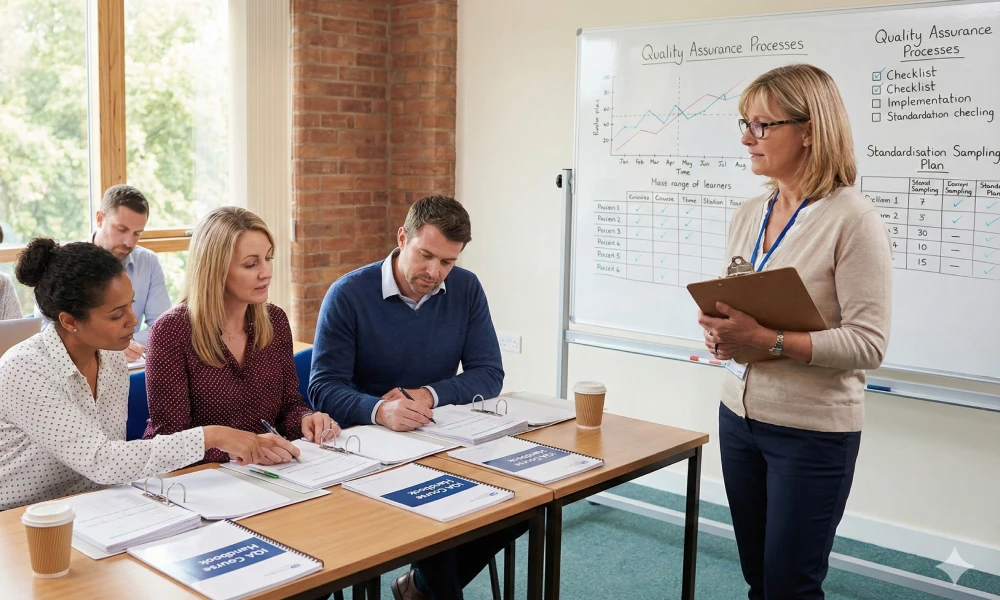
Have you mastered the art of assessing? If you are already a qualified assessor holding a CAVA or A1 certificate, you might be wondering what comes next. The natural next step in your career is to move into Internal Quality Assurance (IQA). Becoming an IQA allows you to stop assessing students directly and start managing the quality of education. It is a step up the ladder, often coming with a higher salary and more responsibility. However, finding the right training can be confusing. There are different types of IQA courses available, and picking the wrong one can be a costly mistake.
In this guide, we will explain everything you need to know about the Level 4 IQA course online, the costs, and which qualification you actually need to get the job.
What is an Internal Quality Assurer (IQA)?
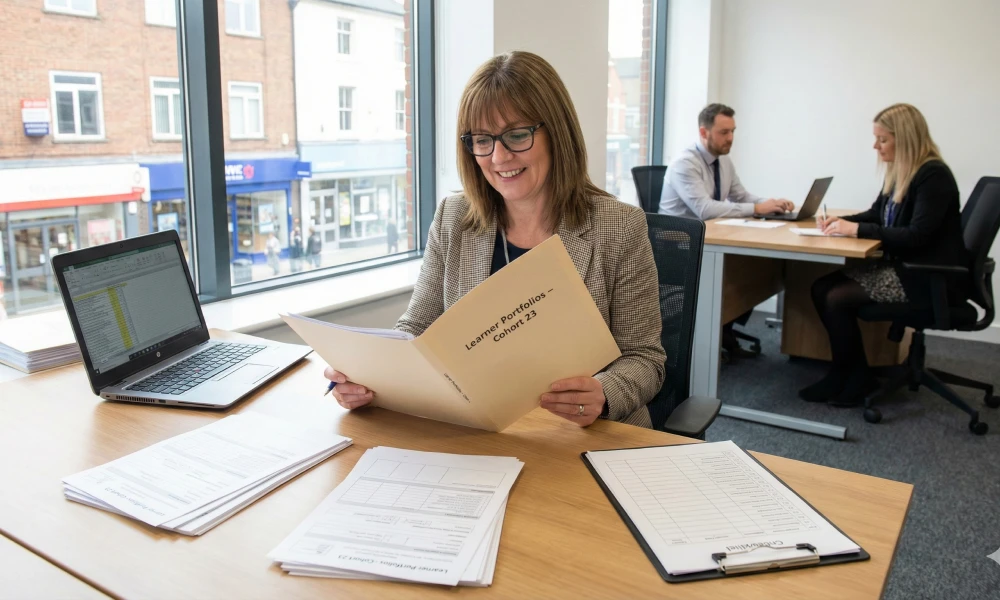
An Internal Quality Assurer (IQA) is responsible for maintaining high standards within a training centre or college. While an assessor checks the student, the IQA checks the assessor. Your job is to ensure that assessment decisions are fair, consistent, and valid. You will monitor the quality of assessment across the organisation. This involves sampling student portfolios, observing assessors, and giving feedback to your team. You act as the “gatekeeper” of quality. You ensure that when an external verifier (from an awarding body like City & Guilds or NCFE) visits, everything is perfect.
The Different Types of IQA Courses
This is where many people get confused. “IQA” is not just one single course. It is a suite of regulated qualifications. Depending on your career goals, you need to choose the right level. Here is a breakdown of the three main options.
1. Level 4 Award in Understanding the Internal Quality Assurance of Assessment Processes and Practice
This is often called the “knowledge-only” unit. It is a theory-based course.
-
Who is it for? This is for managers or completely new staff who need to know how IQA works but will not be doing the job themselves.
-
Important: This qualification does not qualify you to work as an IQA.
2. Level 4 Award in the Internal Quality Assurance of Assessment Processes and Practice
This is the standard, industry-recognised qualification. It combines the theory unit (above) with a practical unit where you assess the work of two assessors.
-
Who is it for? Anyone who wants to work as a practicing IQA. This is the most popular choice.
3. Level 4 Certificate in Leading the Internal Quality Assurance of Assessment Processes and Practice
This is the most advanced qualification. It is known as the Lead IQA course.
-
Who is it for? This is for people who manage a whole team of IQAs. You will learn how to produce work plans, manage staff, and handle external visits.
What Qualifications Do I Need to Be an IQA?
To enrol on a level 4 iqa course online, you typically need to meet a few requirements. First, you must be a qualified assessor. You should hold the Level 3 CAVA (Certificate in Assessing Vocational Achievement) or the older A1/D32 qualifications. Second, you need occupational competence. This means you must be an expert in the subject you are quality assuring. For example, if you are quality assuring construction courses, you must have a background in construction. Clarification on Levels: Sometimes people search for an “iqa qualification level 3”. It is important to know that this does not exist. All IQA qualifications are Level 4. This reflects the fact that it is a management-level role that requires a higher level of responsibility than assessing.
How Long Does an IQA Qualification Take?
One of the most common questions we get is: “How long does an IQA qualification take?” Because our IQA courses online are self-paced, the timeline is up to you. However, most learners complete the standard Award in 3 to 6 months. If you choose the Lead IQA course (Certificate), it may take 6 to 12 months because there is more work involved. You will need to gather evidence, write assignments, and observe assessors in your workplace. With our flexible system, you can fit this around your current job.
IQA Salary and Career Progression
Investing in your education is a big decision, so you want to know the return on investment. How much does an IQA earn? Salaries vary depending on the sector, but a qualified IQA in the UK typically earns between £25,000 and £35,000 per year. Experienced Lead IQAs or those working in specialised sectors (like engineering or offshore energy) can earn significantly more, often exceeding £40,000. There is also a strong market for freelance IQAs. Many training centres hire contractors to check portfolios for a few days a month. This can be a lucrative way to boost your income alongside a full-time job.
The Truth About Costs
You might be searching for a free iqa qualification. We need to be honest: fully accredited, regulated qualifications are rarely free. There are costs involved in registration, certification, and tutor support. While you may find free information online, you cannot get a certificate that employers respect without paying for a proper course. However, the iqa qualification cost is an investment. The increase in salary potential usually pays for the course fee within the first few months of working in your new role.
Why Choose Cambridge Open College?
When you study with us, you are choosing quality and flexibility.
-
Accredited & Regulated: Our courses are Highfield Level 4 Award or TQUK accredited. These are regulated by Ofqual, meaning your certificate is recognised by employers across the UK.
-
Expert Tutor Support: You are never alone. You will be assigned a personal tutor who will guide you through the assessment processes and practice.
-
Flexible Learning: You can study whenever and wherever you want. There are no strict term times.
Whether you are looking for a standard IQA qualification online or the advanced Lead IQA certificate, we have a pathway that suits you.
Conclusion
Becoming an Internal Quality Assurer is a fantastic way to progress your career in vocational education. It allows you to step back from direct teaching and focus on maintaining standards and helping other staff improve. If you are ready to ensure the quality of assessment in your sector, it is time to get qualified. Don’t settle for being just an assessor. Take the next step.