Do you want to gain new skills or change your career but struggle to find time around work and family? You’re not alone. Thousands of adults across the UK face the same challenge every day. Online distance learning courses offer a practical solution that lets you study without giving up your job or existing commitments. This flexible approach to education has transformed how people learn, making qualifications accessible to everyone regardless of their circumstances.
Distance learning and online courses have grown significantly in recent years. More people are choosing to study remotely because it fits around their lives rather than forcing them to rearrange everything. Whether you’re a working professional, a parent, or someone looking to start a new career, online distance learning courses provide the flexibility you need. You can learn at your own pace from the comfort of your own home, with support from tutors and access to quality learning materials whenever you need them.
What Are Online Distance Learning Courses?
Online distance learning courses are qualifications that you complete remotely without attending a physical classroom. Instead of travelling to a college or university, you access all your study materials through an online portal. This means you can study anywhere in the world as long as you have an internet connection. The distance learning course structure typically includes written materials, videos, assignments, and support from a personal tutor who guides you through your learning journey.
The key advantage of this approach is flexibility. Distance learning allows you to fit education around your life rather than the other way round. You decide when and where you study, how many hours a week you dedicate to learning, and how quickly you progress through the course content. Some learners complete their qualification in a few months, whilst others take longer depending on their circumstances. This self-paced approach makes education accessible to people who couldn’t otherwise pursue qualifications.
Most distance learning courses are delivered through a dedicated learning portal where you’ll find all your course materials, submit assignments, and communicate with your tutor. Many courses also include online forums where you can connect with other learners, share experiences, and support each other. This creates a virtual learning community even though you’re studying remotely.
Benefits of Distance Learning Courses
The flexibility that distance learning provides is its biggest benefit. You don’t need to commute to a college or attend classes at set times. This saves you time and money whilst reducing stress. If you work full time, you can study in the evenings or weekends. If you have caring responsibilities, you can fit your learning around school runs or nap times. The course adapts to your schedule, not the other way round.
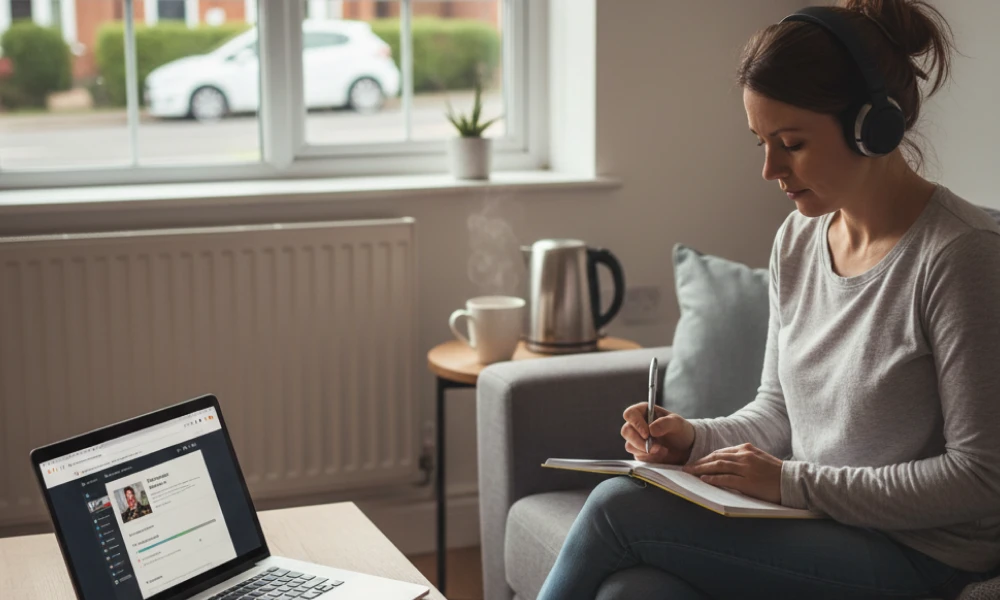
Studying from the comfort of your own home creates a familiar learning environment where you feel relaxed. You can work at your desk, on your sofa, or even in your garden. There’s no pressure to keep up with a classroom full of people or worry about asking questions in front of others. You set your own pace and take the time you need to understand each topic properly.
The range of courses available through distance learning is impressive. You’ll find everything from short courses that take a few weeks to complete through to full diploma programmes and higher education qualifications. Popular subjects include health and social care, business, teaching, mental health, and many vocational areas. Whatever your career goals, there’s likely an online distance learning course that matches your needs.
Types of Distance Learning Courses Available
Distance learning courses cover a wide range of subjects and qualification levels. If you’re starting out or returning to education after a break, level 2 qualifications provide a solid foundation. These courses are equivalent to GCSE level and help you develop core skills in subjects like English, maths, or specialist areas such as customer service or administration. A level 2 qualification can open doors to better job opportunities or prepare you for more advanced study.
Level 3 qualifications sit at A-level equivalent and are perfect if you want to specialise in a particular subject or prepare for higher education. These courses provide deeper knowledge and often lead directly to employment in your chosen field. Many people complete level 3 distance learning courses whilst working, using their new qualification to progress in their current career or move into a completely new sector.
Diploma courses provide comprehensive training in vocational subjects. These qualifications combine theoretical knowledge with practical skills, preparing you for specific careers. Popular diploma programmes include health and social care, early years education, counselling, and business management. The learning materials are designed to be practical and relevant, focusing on real-world applications rather than just academic theory.
Who Can Benefit from Distance Learning?
Online distance learning courses suit almost anyone who wants to learn but needs flexibility. Working professionals often choose distance learning because they can study without taking time off work. You might want to gain additional qualifications to progress in your current role, or you might be planning a career change and need new credentials. Either way, studying remotely lets you continue earning whilst you learn.
Parents and carers find distance learning particularly helpful because they can fit study around family responsibilities. You’re not tied to attending classes at times that clash with school pickups or other commitments. This flexibility means you don’t have to put your education on hold until your children are older or your caring duties reduce. Many parents successfully complete qualifications whilst managing busy family lives.
How Distance Learning Works
When you enrol in an online distance learning course, you’ll receive login details for your learning portal. This virtual platform becomes your classroom, library, and communication hub. You’ll find all your study materials here, including written course content, videos, assignments, and additional resources. Most portals are designed to be user-friendly, so you don’t need advanced technical skills to navigate them successfully.
Your personal tutor provides guidance and support throughout your course. They’re available to answer questions, provide feedback on your work, and help you overcome any challenges. Whilst you study independently most of the time, knowing you have expert support makes a big difference to your confidence and success. Most tutors respond to queries within a day or two, ensuring you never feel stuck or isolated in your learning.
Popular Distance Learning Subjects in the UK
The range of courses available through distance learning continues to grow as more people embrace flexible study. Health and social care courses remain consistently popular, preparing learners for rewarding careers supporting vulnerable people. These programmes cover essential topics like safeguarding, person-centred care, and health and safety, giving you practical skills that employers value highly.
Business and management courses attract professionals who want to progress into leadership roles or start their own enterprises. These qualifications cover areas like project management, human resources, marketing, and finance. The skills you develop are transferable across industries, making business qualifications a versatile choice for career development.
Free vs Paid Distance Learning Options
Many people ask “can I do online courses for free?” and the answer is yes, though with some caveats. Some distance learning courses are free to access, particularly shorter programmes or introductory courses. However, free online courses may not always lead to recognised qualifications from awarding organisations. They’re useful for exploring a subject or developing basic skills but might not carry the weight that employers look for on CVs.
Eligibility criteria for free courses vary. Some are funded through government schemes for specific groups like unemployed people or those on certain benefits. Others are offered by educational institutions as tasters to encourage further study. It’s worth checking what’s included in free provision and whether you’ll receive a certificate or formal qualification at the end.
Getting Started with Distance Learning
Starting your distance learning journey is straightforward. First, identify what you want to achieve. Are you looking to change careers, gain a promotion, or simply learn something new? Your goals will guide which course and qualification level suits you best. Consider how much time you can realistically dedicate to study each week and how quickly you want to complete your qualification.
Research the range of courses available and check that qualifications are accredited by recognised awarding organisations. This ensures your certificate will be valued by employers and professional bodies. Read course descriptions carefully to understand what’s covered, how the course is assessed, and what support you’ll receive. Don’t hesitate to contact course providers with questions before you enrol.
Frequently Asked Questions
What are the best distance learning courses?
The best distance learning courses depend on your personal goals and circumstances. Popular options include health and social care qualifications, business management diplomas, teaching assistant certificates, and counselling courses. Consider what skills you want to develop and which careers interest you. Courses that lead to recognised qualifications from established awarding organisations tend to offer the best value because employers respect these credentials. It’s also worth choosing courses that provide comprehensive tutor support and quality learning materials to enhance your learning experience.
Which course is best for a 40 year old woman?
There’s no single “best” course for women over 40, as this depends entirely on your interests, existing experience, and career goals. Many women this age successfully transition into health and social care, counselling, teaching support roles, or business administration through distance learning. Consider what you’re passionate about and where your strengths lie. Distance learning removes age barriers, giving you the flexibility to study whilst managing work and family commitments. Think about sectors with good job prospects and whether you want to work with people, pursue creative interests, or develop technical skills.
Can I do online courses for free?
Yes, some online courses are free, particularly shorter introductory programmes. However, free courses may not always provide recognised qualifications from awarding organisations. Government-funded schemes sometimes cover course costs for eligible learners, such as those claiming certain benefits or meeting specific age criteria. Whilst free online courses can be valuable for exploring subjects or developing basic skills, investing in accredited paid courses often leads to better employment outcomes. Check eligibility criteria carefully and consider what certification you’ll receive upon completion.
Which course is most in demand in the UK?
Healthcare, social care, and early years education courses are consistently in high demand due to workforce shortages in these sectors. Teaching assistant qualifications are also popular as schools seek qualified support staff. Mental health awareness and counselling courses have grown significantly as wellbeing becomes a priority. Business management and digital skills courses remain valuable across industries. However, choose a course based on your interests rather than just demand, as you’re more likely to succeed and enjoy a career you’re passionate about.
How many hours a week do I need for distance learning?
Most distance learning courses require between five and ten hours per week, though this varies depending on the qualification level and your learning pace. The advantage of flexible study is that you can adjust your commitment based on your circumstances. During busy periods, you might study less, whilst you can dedicate more time when your schedule allows. Many courses let you complete modules in your own timeframe, so there’s no fixed weekly requirement. Consider your existing commitments and be realistic about what you can manage consistently.
Are distance learning qualifications recognised by employers?
Yes, distance learning qualifications from reputable providers and awarding organisations are widely recognised by employers. What matters is that your course leads to an accredited qualification, not how you studied for it. Many employers actually value the self-discipline and motivation that distance learning demonstrates. When choosing a course, check that it’s accredited by recognised bodies and leads to industry-standard qualifications. Vocational qualifications in areas like health and social care, business, and education are particularly well-regarded when earned through established distance learning providers.
Ready to start your learning journey? Explore our wide range of online distance learning courses designed to fit around your life. With flexible study options, dedicated tutor support, and qualifications recognised across the UK, you can achieve your goals without putting your life on hold. Contact us today to discuss which course is right for you.